Content Hangover No. 10 by: Garrett Crusan
mary in the junkyard
at Baby’s All Right
According to mary in the junkyard’s Clari Freeman-Taylor, “the world is a junkyard”. While the sentiment might seem bleak, it’s important to note that Freeman-Taylor declares this with no hint of nihilism. In an interview with Static, she clarifies: “...the junkyard, for me, represents chance and spontaneity.”
Those two things—chance and spontaneity—have been essential for the rise of Freeman-Taylor, Saya Barbaglia, and David Addison’s otherworldly indie project. Chance: the now-legendary indie lore that, while looking for a place to crash in New York post-show, the band ended up befriending the legendary performance artist Marina Abramović (someone they now consider a “New York parent”) which catapulted the band into fresh, freakier creative directions that smeared the physical and the audible together into fantastical multimedia. Spontaneity: Freeman-Taylor’s prosthetic getup, beard and all, on the cover of their July 2026 debut record Role Model Hermit and her oft-quoted note that “instinct” is the key that unlocked mary in the junkyard’s sonic and visual universe. In a world as algorithmic as ever, they’ve leaned so far back in the opposite direction by embracing intuition that they’ve toppled over entirely, falling backwards into a strange and insular world that can only be created by accessing the most offbeat corners of the human psyche.
Their two sold-out shows at Baby’s All Right this November were the first time the London trio has been back to NYC since the release of their debut, and the hype in the days leading up to those gigs was frantic and electric. I looked up the phrase “mary in the junkyard baby’s all right” to make sure I got the date of the show correct (I didn’t) and several of the search results were actually just links to Instagram stories from pleading New York show-goers: “pleeeeease does anyone have a ticket for mary in the junkyard at baby’s this week” and, more extremely, “i will sell all of my non-essential organs for one ticket to the mary in the junkyard show.”
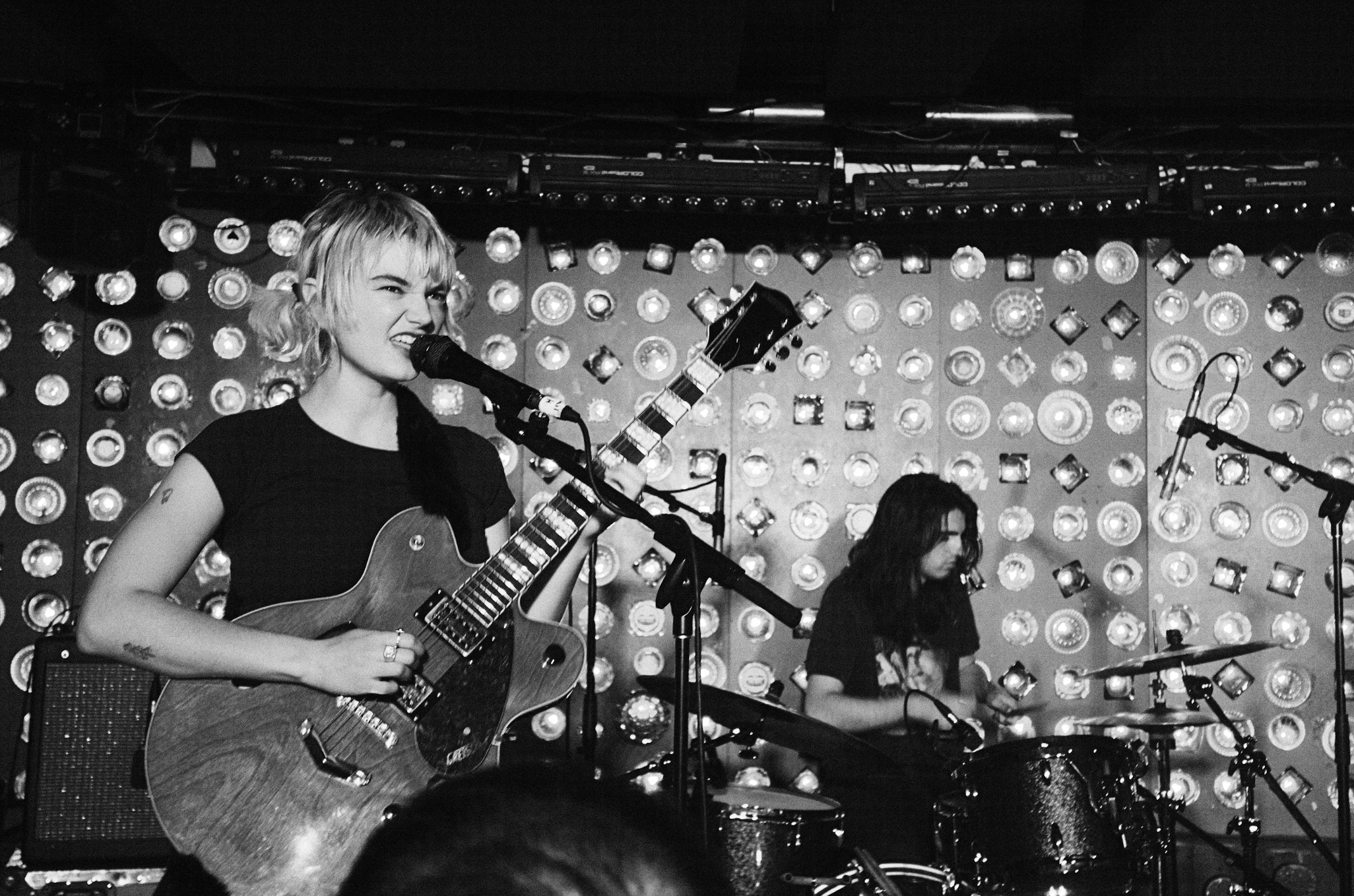
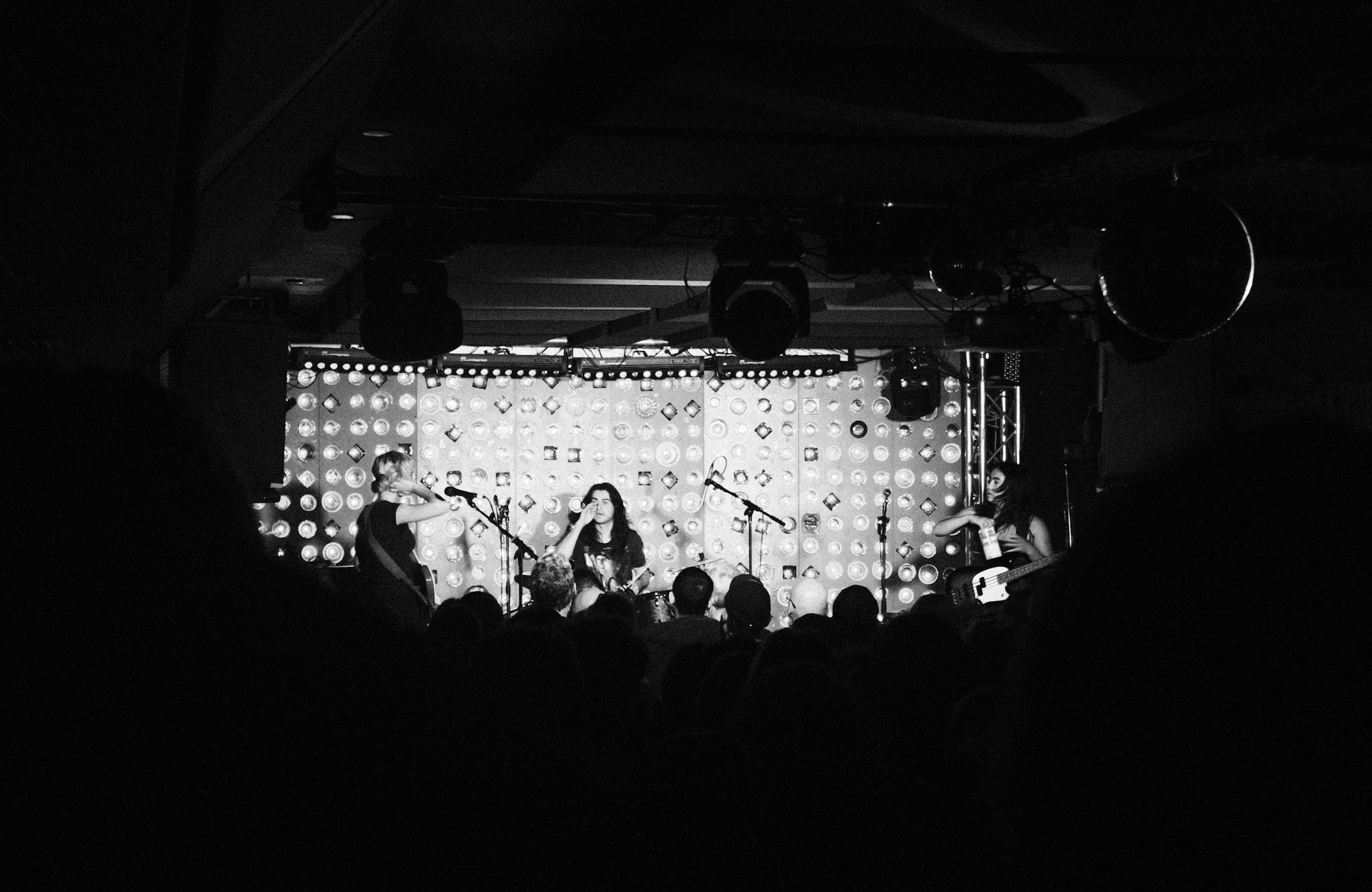
The online hype proved, unsurprisingly, to be entirely physical as well when I showed up to Baby’s very early and was still nearly unable to secure a spot up front to take photos of the band. mary in the junkyard’s clientele was refreshingly diverse, spanning X-handed kids with their parents and scene veterans I’ve met several times before at other “up-and-coming” artists’ shows. We were all bathed in the purple shine of Baby’s’ wall of LED bulbs, packing in closer and closer together as the anticipation built up. By the time the band quietly snuck on stage, it was almost impossible to move in any direction. The several photographers up front armed their cameras; strange, giant machines for a space so small, instruments more fit for snapping ESPN coverage, all blocking the view of the young kids in the third row. “Who are you shooting for?” “I haven’t heard of these kids before.” Thankfully, they were the only people set on the hype-capitalization; the rest of us were just happy to be there.
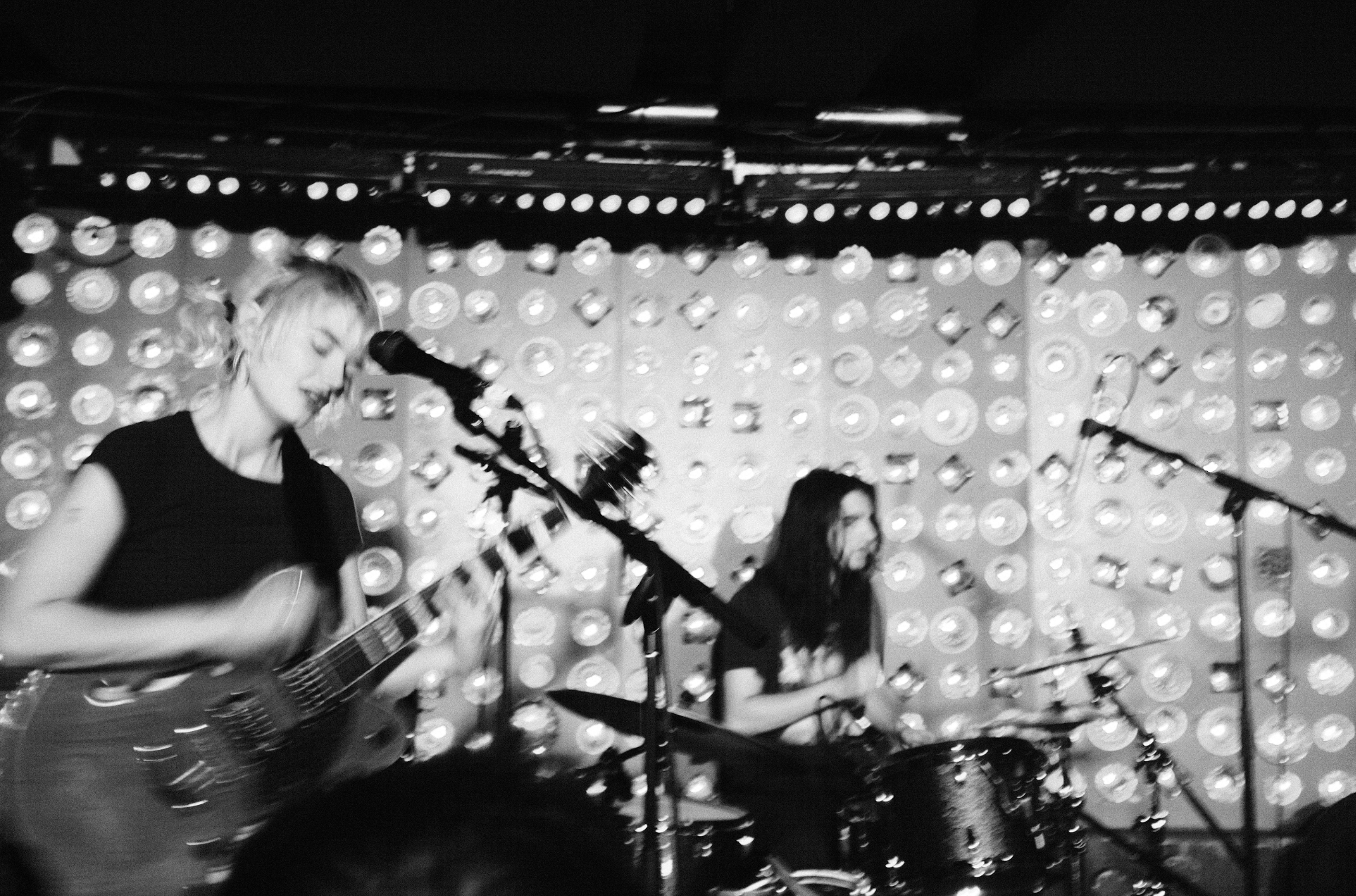
Fittingly, the most accurate way to describe mary in the junkyard’s live show is “hermetic.” There was a sort of gentleness that fell over the room when they eased their way into “Mantra III”, its drones functioning as a kind of sonic blanket for everyone to share. Like an extension of her whispered vocals, Freeman-Taylor spoke so softly in between songs that those with earplugs on had to take them out to make out what was said. Her, Barbaglial, and Addison fell into each other so deeply in performance that, several times, they may as well have disappeared. The chemistry mary in the junkyard had as a band was so sequestered to the confines of the stage that as the show progressed it felt as if an actual, physical barrier was separating them from the crowd, and it was a wall they had no interest in breaking down. There was a palpable tension between their self-contained style of performance and the sheer expanse of the audience, who were all packed together like sweating sardines, witnessing this ritual through a stained glass window. The band was putting their universe on display for us as if we were museum-goers, swallowing their compositions at our own pace, each body engulfed in its own experience of the work.
They breezed through a set packed with cuts from Role Model Hermit—the skittering guitar work on “Blood”; the haunting drones of “Mantra III”; the ethereal and eerie refrain of “you opened up like a coconut” on “Crash Landing”;—but most the affecting moment from the set happened to be an unreleased “autobiographical” track called “Mary”. It might be the group’s most straight-ahead song; at its core, it’s a perfectly crafted pop tune, one whose refrain of “no one gives a fuck about you” is delivered with such charming candor that, despite the weight of the words, was still delightfully sweet to sing along to. It’s a track that could potentially catapult mary in the junkyard twice as far as Role Model Hermit did this year, a set-staple in the making.
It’s tempting to trace the band’s lineage of influence because, on the surface, one might think that all of it is clearly visible. However, comparisons to contemporaries are undoubtedly counterproductive: mary in the junkyard soar beyond the sum of their immediately visible tastes. Is it 2010s indie? Barbaglia’s droning violin soundscapes say otherwise. Call it “early Big Thief-style indie folk?” Freeman-Taylor’s jittery, sometimes Midwest-emo-style guitar playing upends that notion completely. The group occupies a very peculiar spot in the “indie” world right now; one that diverts from their oft-noted influences completely.
Despite the potential “indie” history that was being scribed before our eyes, audience members were entering and exiting through the entire set; “Excuse me, so sorry, so sorry”. Even though the squeezing took us out of the trance, admittedly, I didn’t blame them. There was a point in the show where I truthfully felt that I’d pass out because of how oversold the venue was. mary in the junkyard thinned the air; we were, for a moment, ten thousand feet above sea level.